

Minnesota winters bring freezing temperatures, snow accumulation, and fluctuating conditions that put your home’s foundation to the test. Water that collects near your foundation, hidden leaks, and poorly managed humidity all contribute to basement moisture.
Before temperatures drop too low, prepare your basement for winter to protect your home, prevent costly repairs, and maintain a healthier indoor environment throughout the season.
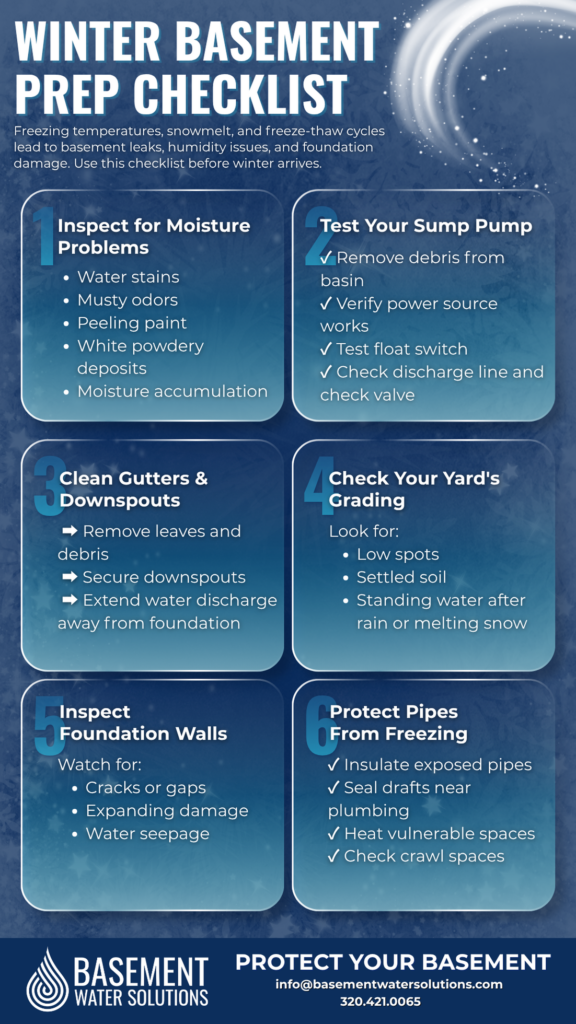
Inspect for Existing Basement Moisture
Dealing with small leaks or seepage is an important part of winter basement protection, as these issues can easily become bigger problems if not addressed.
Walk through your basement and look for damp spots, water stains, peeling paint, musty odors, or white, powdery deposits on concrete walls, all of which indicate ongoing basement moisture problems. Check especially around windows, plumbing penetrations, floor joints, and the base of foundation walls. Even if you haven’t noticed standing water or visible cracks, recurring dampness may point to a drainage or waterproofing issue.
Test Your Sump Pump
Your sump pump is a key part of basement waterproofing in Minnesota, moving groundwater away from your foundation during winter freeze/thaw cycles and spring snowmelt.
To help prepare your basement for winter:
- Inspect the pump basin for debris
- Ensure the sump pump has reliable power
- Test the pump and float switch by carefully adding water to the basin
- Check the discharge line and check valve to ensure water is being redirected and not flowing back into the basin
Clean Gutters and Downspouts
Clogged gutters send roof runoff over the edges and directly toward your foundation, so if cleaning them isn’t already part of your fall chores, it should definitely be added to your winter basement protection to-do list.
Remove leaves, twigs, and other debris before freezing weather makes it difficult. Check that downspouts are securely connected and are long enough to direct water well away from the house.
Check the Grading Around Your Home
Most people don’t think of their property’s grading as a part of basement waterproofing in Minnesota, but it is an important factor. The soil around your home should slope away from the foundation so rainwater and melting snow drain away rather than toward your house. Look for settled soil, low spots, or areas where water pools.
While you may not be able to regrade your home before the ground freezes, being aware of the issue prepares you for the possibility of basement moisture—and ensures you know how to prevent it next year.
Look for Foundation Cracks
Inspect accessible foundation walls for cracks, gaps, or areas where existing damage appears to be expanding. Small cracks allow water to enter, while widening cracks, displacement, or recurring seepage may indicate a more significant basement moisture concern.
Not every crack means your foundation has a serious structural problem, but unexplained changes should be assessed by a professional. Identifying potential entry points helps strengthen your basement’s winter protection and prevents existing basement moisture issues from going overlooked.
Manage Basement Humidity
Effective humidity control is another part of basement winter preparation, but basements are naturally more vulnerable to humidity—so when should you be concerned? Watch for musty smells, visible condensation, and signs of mold or mildew. Warping wood or flooring and peeling paint also point to serious basement moisture issues.
Keeping indoor relative humidity between 30% and 40% during winter helps limit moisture problems. A dehumidifier is a good start, but it won’t fix underlying issues like leaks, poor grading, or poor downspout redirection.
Protect Pipes From Freezing
Uninsulated pipes in cold areas of the basement or crawl space can freeze during extended cold snaps. To protect your basement in winter, insulate exposed pipes, seal drafts near plumbing, and keep vulnerable areas adequately heated. Check pipes near exterior walls, foundation openings, and unheated utility spaces.
If you have a crawl space, make sure it is properly assessed for moisture and temperature concerns. Professional crawl space encapsulation may help manage ground moisture as part of a broader basement waterproofing in Minnesota plan.
Prepare for Winter with Basement Water Solutions
The best time to address basement water concerns is before winter weather makes repairs more difficult. Consistent maintenance helps you prepare your basement for winter, but recurring leaks, damp foundation walls, or persistent basement moisture may require a professional touch.
Don’t wait for the next freeze to discover a problem. Contact Basement Water Solutions to schedule an assessment and learn how our local expertise in basement waterproofing Minnesota homes can help you protect your property year-round.
